Velocity decay isn't a bug

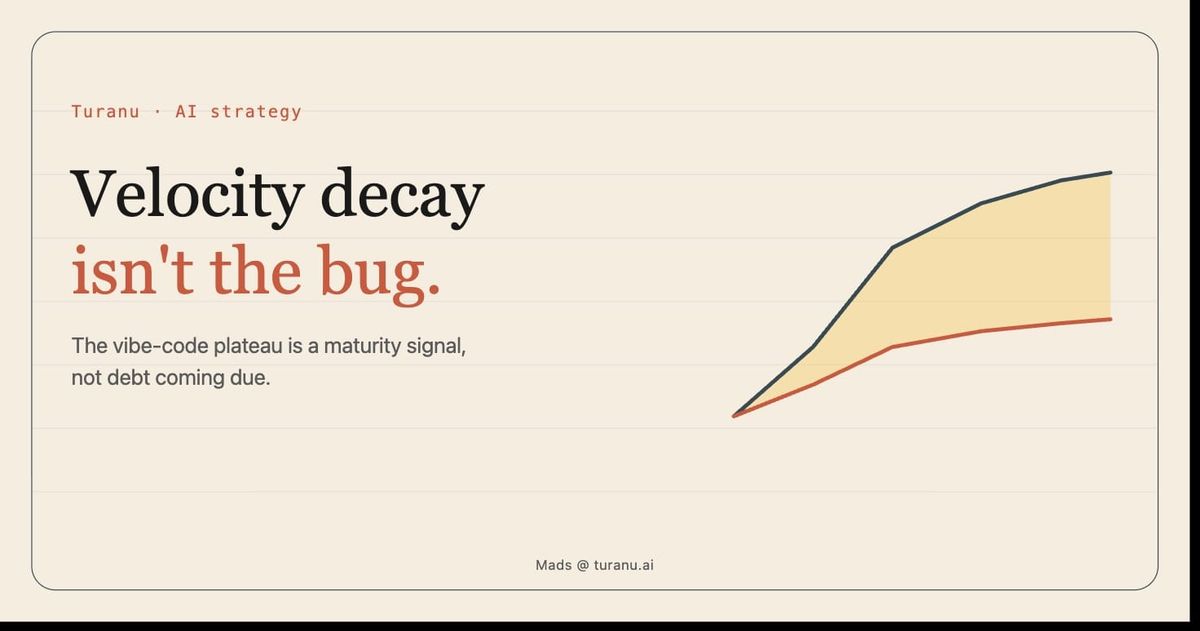
Your vibe-code velocity slowing down is not the warning sign everyone says it is.
The dominant take treats the plateau as debt coming due: you deferred the architecture, the system can no longer absorb change safely, and every small edit now risks breaking something you no longer understand. Sometimes that is exactly what is happening. More often it is the opposite.
The slowdown is the product talking back.
It is telling you that you have built enough coherence, and attracted enough real usage, that adding features now carries cost. Early on, velocity is free because nothing is load-bearing yet. Later, every addition touches something a user depends on. The friction you feel is not the model getting worse; it is the system acquiring weight worth protecting.
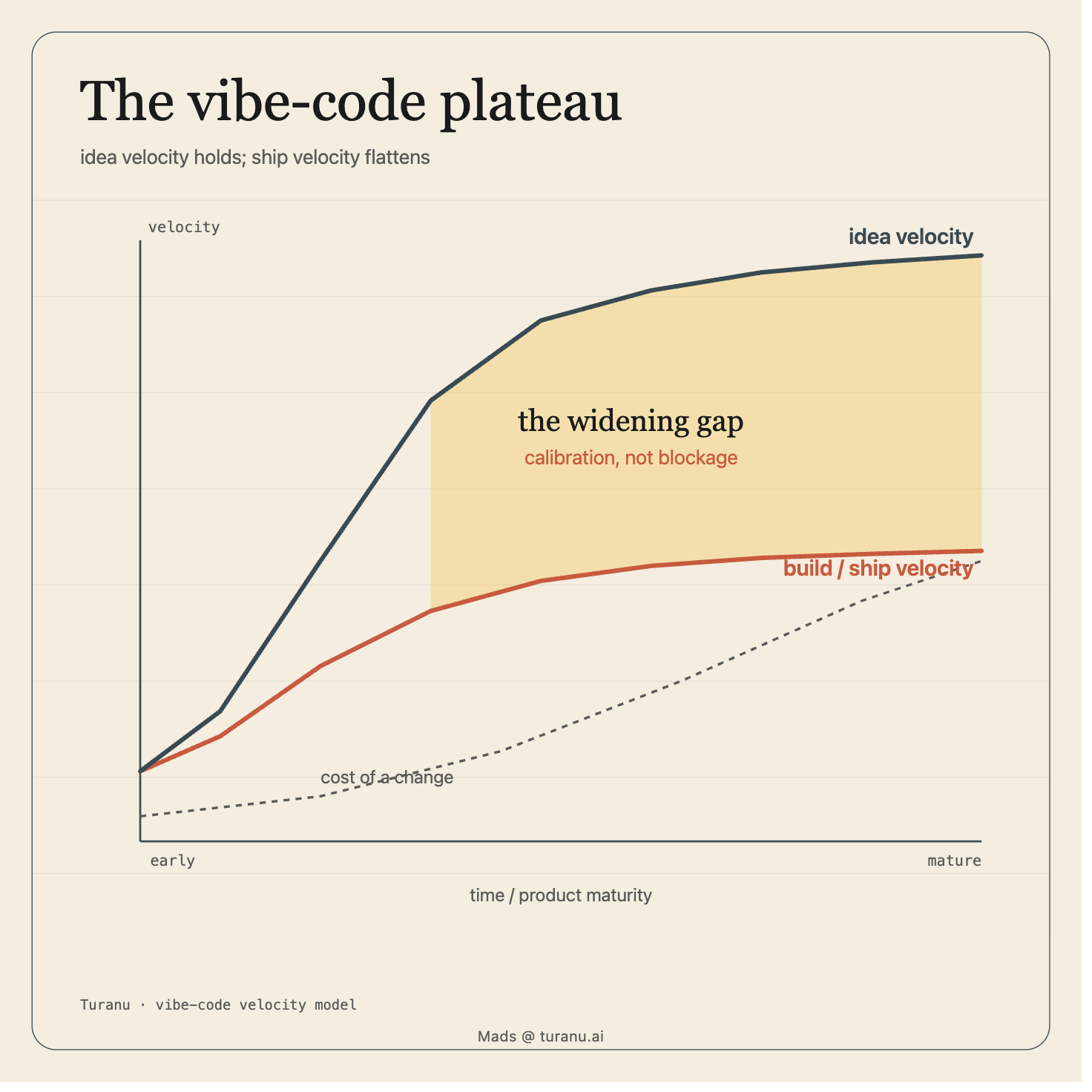
The trap is that both plateaus feel identical from the inside. One is "I built something real and should slow down." The other is "I deferred the architecture and the bill is due." The mature builder diagnoses which one they are in before celebrating.
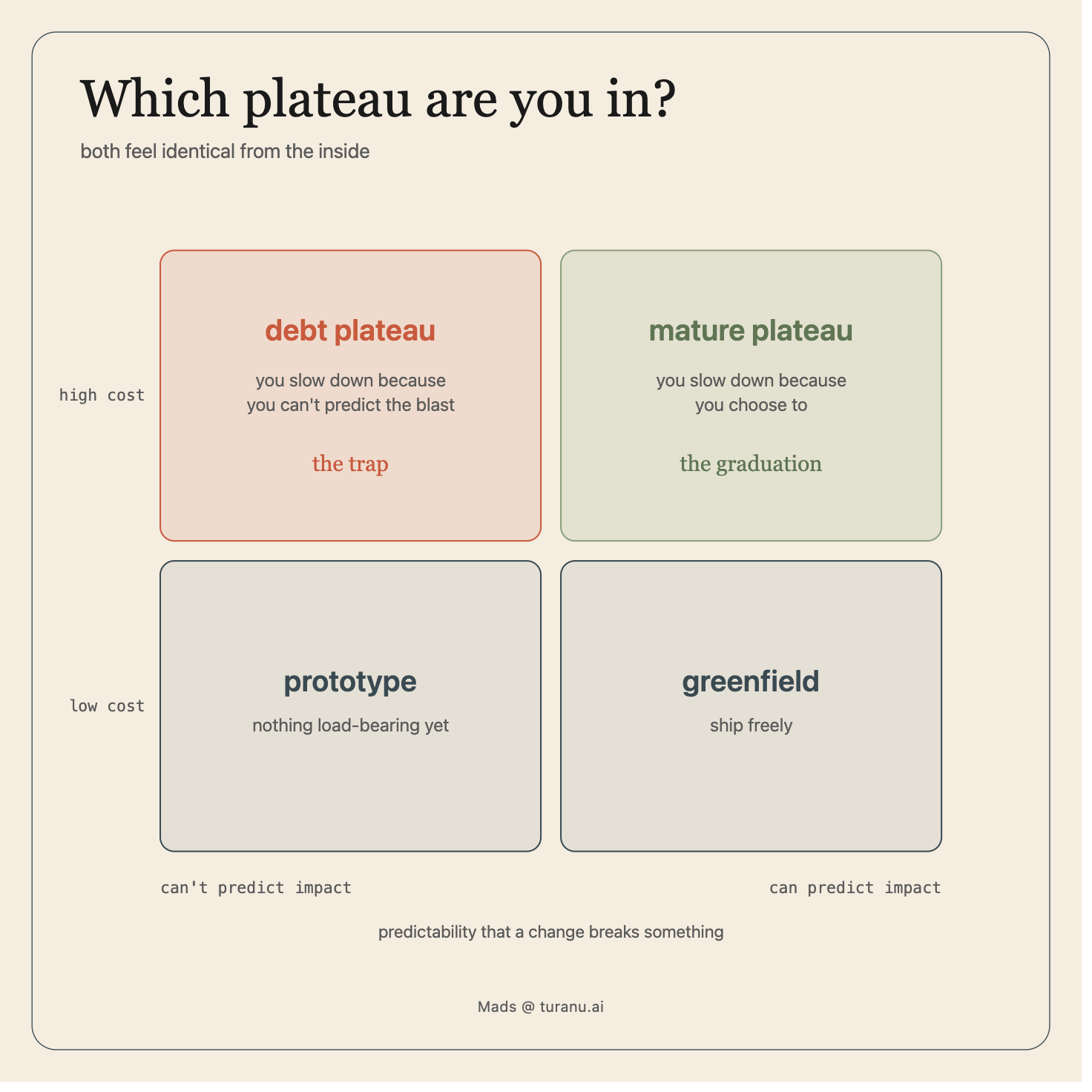
The tell is where the friction lives: friction from product coherence and user cost is a graduation; friction from not understanding your own system is a regression.
Watch your idea velocity. That is the giveaway.
When your ability to imagine the next ten features stays intact but your willingness to ship them drops, you are not blocked; you are calibrating. That shift, from "ship because I can" to "protect what's working," is the actual marker of product maturity.
The discourse is often alarmist about the slowdown. Treating velocity decay as a bug is the real mistake.
#VibeCoding #ProductManagement #EngineeringLeadership #TechnicalDebt #AIengineering