Entrench What Compounds, Rent What Decays

"When change is easy, the need for it cannot be foreseen; when the need for change is apparent, change has become expensive, difficult, and time-consuming."
David Collingridge wrote that in 1980, in a book on controlling technology that leaned on cases like nuclear power and heavy industry. Four decades later it reads like a description of the AI-architecture decision.
Early, while the stack is still cheap to change, you cannot yet see which choice will matter. Later, once the consequences are legible, the choice has hardened into contracts, data gravity, and retraining budgets you cannot unwind. Every enterprise picking a model, a harness, or a build-versus-buy line is standing in that trap right now.
The dilemma is real. The escape is new. AI-era tooling lets you stop trying to make the decision correctly and start making it cheap to reverse. That shift is most of the game.
Two camps, both winning their own argument
One camp says entrench. The value in an agent stack sits above the model, and that reading is close to vendor consensus. Nadella calls a company's private evals the single biggest IP it can hold, the real test being whether you can swap one model for another underneath them and keep hill-climbing; Microsoft has bundled identity, grounding, governance, and metering into a single enterprise control plane, and that control-plane claim has climbed all the way to the OS kernel with Windows 11's containment layer. The moat is the accumulated scaffold, so you want lock-in.
The other camp says stay liquid. The model layer is commoditizing underneath you. Epoch measures roughly a 3-month gap between open-weight and frontier capability; Flash-tier pricing has crossed what Pro-tier used to cost; enterprise card-spend data now reads multi-vendor, anti-lock-in procurement as a sign of maturity rather than indecision. Preserve optionality, keep switching costs near zero, and treat any single-vendor commitment as a liability.
Both are correct. That is the problem. Read side by side they look like a flat contradiction: lock-in as moat against lock-in as risk.
The resolution is asymmetric
The contradiction dissolves the moment you stop treating the stack as one decision. The right question is not whether to lock in; it is which layer, and whose lock-in you are accepting. Entrench the layer you own and that compounds: your evals, your decision traces, your curated memory, the judgment encoded in how you point the system at work. Stay liquid in the layer a vendor owns or that decays: the model weights, the silicon, the reliability-scaffolding you wrote to paper over this quarter's model gaps.
Entrench the judgment you cannot rebuild; rent the compute you can swap in a quarter.
The commitment-liquidity map
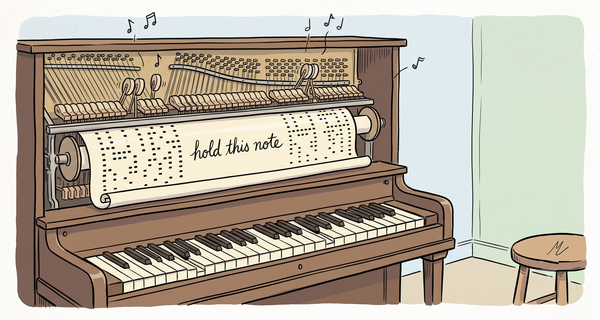
The discriminator is decay rate, and Anthropic said it out loud at Code with Claude. Code that compensates for model unreliability has a half-life of months, because the model absorbs it. Code that connects the model to your world compounds, because the model cannot see it. The routers, retry loops, and validators you built last year now ship inside the API. The proprietary tools, data, and context behind your agent's front door do not, and structurally cannot. That gradient is your architecture map. Build permanence into the compounding half; keep the decaying half swappable on a quarter's notice.
Reversibility becomes something you can measure
Once you accept the frame, reversibility stops being a virtue you preach in design reviews and becomes a property you instrument. The strongest agent products already treat it as first-class. Cursor ships reversibility at four granularities, from line-level accept-or-reject up to conversation-state rollback and parallel model outputs where the discarded branches are simply thrown away. Mozilla shipped 423 Firefox security fixes in a single month by wrapping a commodity model in a harness whose load-bearing part was an independent verifier, so human engineers only ever saw real bugs. The moat there was the verification loop, not the model underneath it.
Oli Cobb, a founding engineer at the patent-AI startup Solving Intelligence, makes the same cut in different words: sort the work by validatability and entanglement. Where outputs validate cheaply and decisions stay loosely coupled, a general agent commoditizes you. Where correctness is a bet against an adversarial future and every decision constrains the next, the durable product is a collaboration scaffold with audit-grade provenance. Validatability is what you keep; entanglement is what you route around. Both are ways of saying the same thing: entrench where judgment lives, stay liquid where the model can be swapped without consequence.
The counter that stops this being a slogan
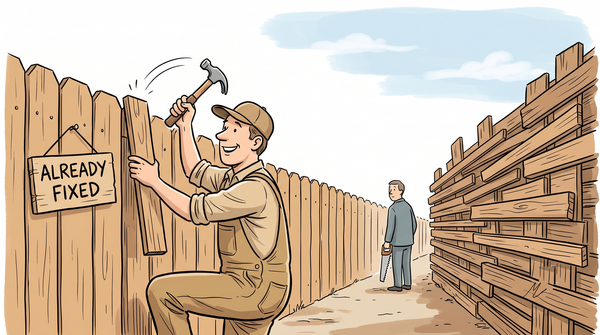
A failure mode hides inside this advice. Name it before a client finds it the expensive way. Entrenching the compounding layer assumes that layer stays yours. It does not do so automatically. Build your evals, memory, and orchestration state on a vendor's control plane and you have not escaped the dilemma; you have relocated it one level up. The proprietary formats are already visible: session state, worktree-lifecycle semantics, approval and action-token models, and goal-loop contracts differ across orchestrators, and none of them port. The control plane that commoditizes the model can quietly become the next lock-in. Entrench the judgment; do not entrench it inside someone else's runtime.
The economics are also, at this stage, asserted rather than proven. There is almost no public data on the cost of the loop that improves the loop: no cost-per-improvement-cycle, no regression rate for the outer loop that curates your evals and memory. The liquidity side leans just as hard on vendor worked examples for its savings figures, 51% from routing, 7-12x from heterogeneous model use, 90% from caching, with no independent total-cost-of-ownership study across architectures. The frame is strong. The unit economics are a live question, and any advisor who pretends otherwise is selling.
The real shape of the decision
Stack selection was always the wrong frame for the AI-architecture decision. The durable frame is commitment-liquidity design: decide, per layer, what you entrench and what you keep swappable, and price each choice against how fast that layer decays. Collingridge's trap holds for anyone still trying to pick correctly under uncertainty. It opens for anyone who builds so the picking stays cheap to undo. The teams that look prescient in three years will not be the ones who chose the right model in 2026; they will be the ones who arranged never to need to.
#AgenticAI #AIStrategy #EnterpriseAI #BuildVsBuy #AIArchitecture