The Code Works Fine. Nobody Can Explain It.

Vibe coding gets you to a working prototype faster than anything before it. The part that trips teams up is the handoff.
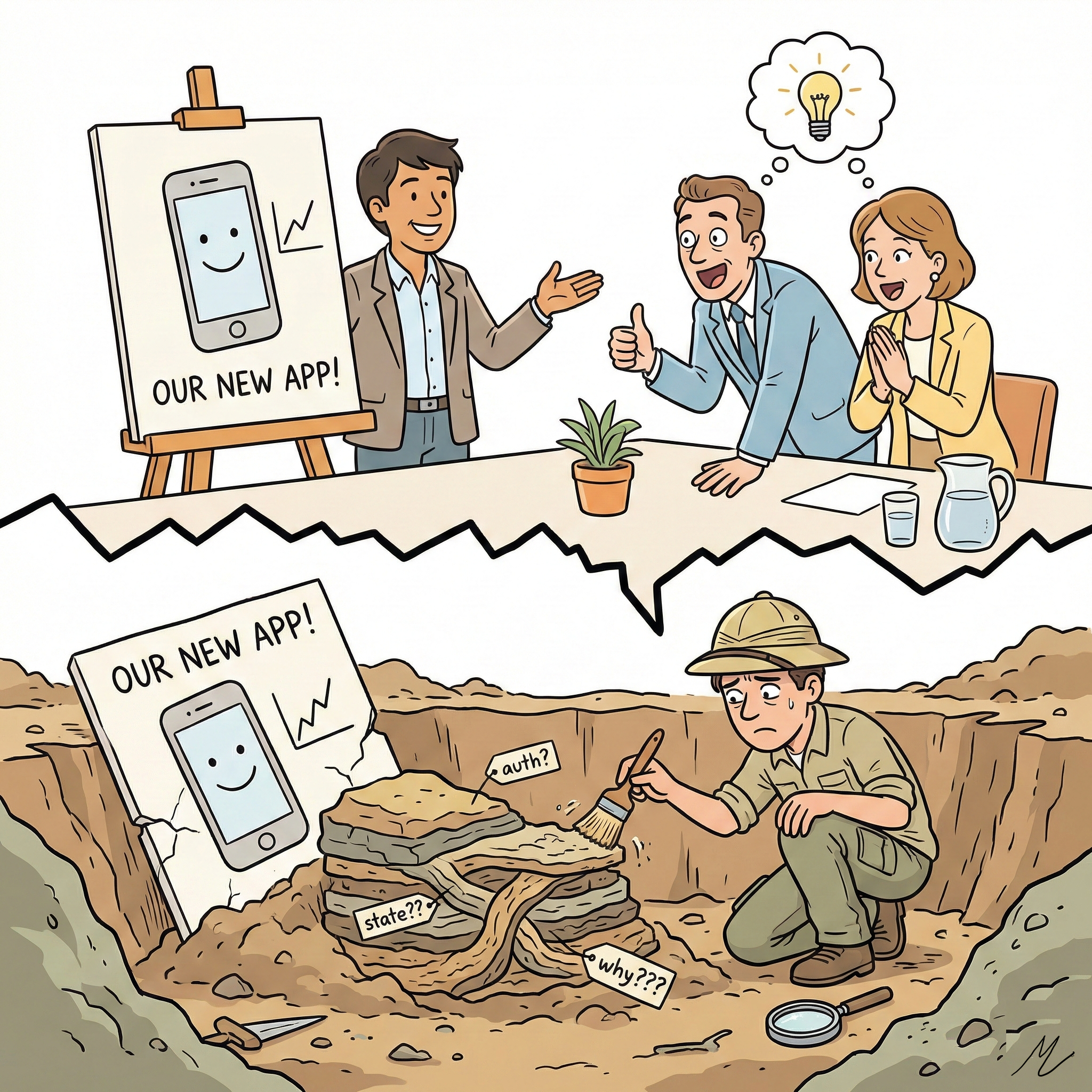
The pattern shows up consistently now. Someone spends a weekend prompting their way to a functional app. The demo lands well, leadership sees velocity, and engineering gets the repo. Then come three questions: What happens when this endpoint gets 10x traffic? Why is auth handled in two different places? Where does this state actually live? If the builder can't answer, the handoff stalls.
The code itself is often surprisingly solid. The gap isn't quality. It's legibility. Every codebase is a stack of frozen decisions about error handling, data flow, security boundaries, and dependency management. When the person who prompted it into existence can't narrate those decisions, the next developer has to reverse-engineer intent from behavior. That's not maintenance. That's archaeology.
Organizations getting the most from AI-accelerated development are treating explainability as a shipping criterion, not an afterthought. The practice requires discipline: document the architectural decisions as you prompt, capture the "why" alongside the "what," make the intent layer as visible as the functional layer.
Vibe coding is a genuine acceleration. The discipline that makes it compound is being able to explain what you built and why.