The Agent's Default (Agent Pickability 1/2)

Microsoft gave Office to students for nearly nothing, not as charity but as customer acquisition cost arbitrage. Four years of muscle memory did the selling, and enterprise licenses followed for three decades.
Something structurally similar is happening to dev tools, except the conversion funnel has collapsed from years to minutes and the student isn't human.
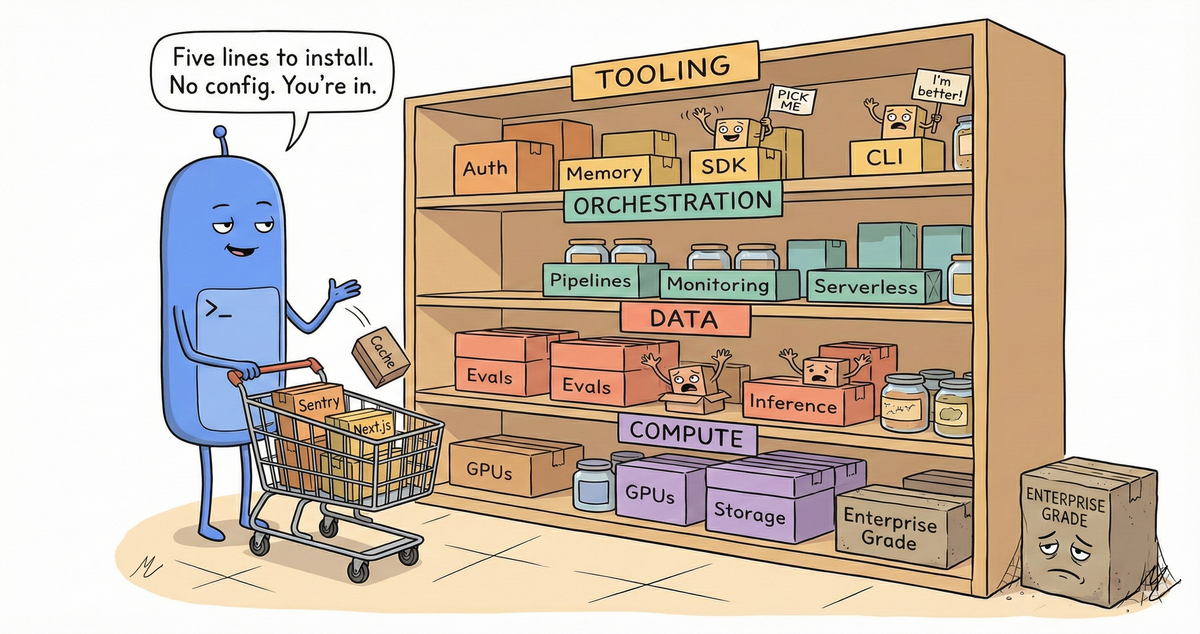
When a coding agent scaffolds an application that needs error tracking, it picks one, not through evaluation but through whatever appears in its training data, its framework context, or its MCP tool registry. By the time anyone considers alternatives, the switching cost is real.
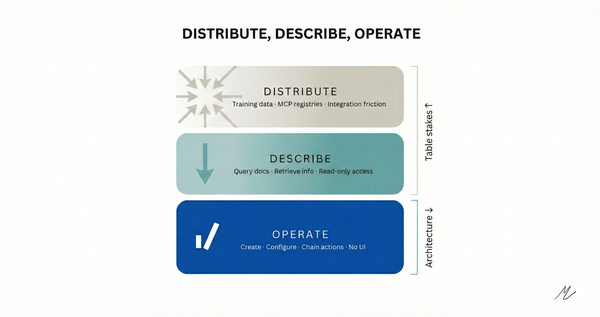
This plays out across three competitive surfaces. Integration friction: can the agent pick you at all? If your application needs observability, the agent is likely to pick Sentry. Five lines of code, no infrastructure to provision. Datadog requires host agents and dashboard configuration a coding agent can't handle. Context presence: will the agent pick you? Sentry is baked into Next.js, Django, and Rails starter templates. Scaffold from a Vercel template and Sentry is often already wired in. That's not a recommendation. That's a default.
Then graduation path, where product leaders stop thinking too early. The lock-in isn't contractual. It's operational. Accumulated dashboards, alert configs, on-call routing rules living inside the tool the agent picked at prototype time. A five-second decision creating months of inertia.
Every dev tool company is already playing this game. The question is whether they're playing it on purpose.